

Kajana Satkunendrarajah, Ph.D.
Associate Professor of Biomedical Engineering
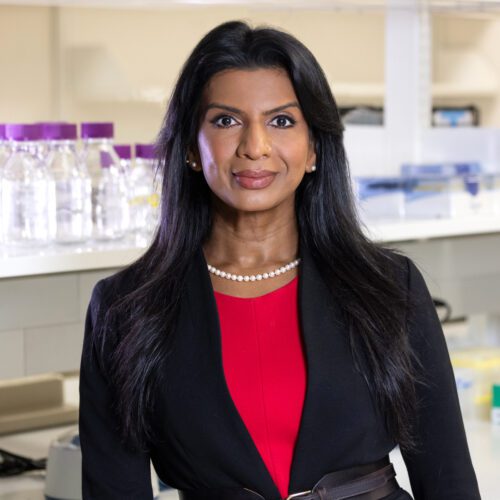
The Miami Project to Cure Paralysis
1095 NW 14th Terrace (R-48)
Miami, FL 33136
Kajana Satkunendrarajah, Ph.D. is currently an Associate Professor in the Department of Biomedical Engineering at the University of Miami. She also leads a research laboratory at The Miami Project to Cure Paralysis, where her team focuses on circuit-level interventions to restore motor and respiratory function following spinal cord injury and related neurological disorders.
She earned her Ph.D. in 2008 from Wayne State University School of Medicine, where her research focused on neural plasticity and spinal cord injury. Following her doctoral work, she completed her postdoctoral fellowship at the Krembil Research Institute in Toronto, Canada in 2014. She continued at the Krembil Research Institute as a Research Scientist from 2015 to 2019, where she advanced her research using systems neuroscience approaches to investigate movement control and respiratory plasticity.
From 2019 to 2025, Dr. Satkunendrarajah served as a faculty member in the Departments of Neurosurgery and Physiology at the Medical College of Wisconsin. During this time, she also held the role of Associate Director of the Neuroscience Research Center. At MCW, her research program pioneered approaches to understand and manipulate spinal and supraspinal circuits using tools such as optogenetics, chemogenetics, viral tracing, and electrophysiology. Her group published several landmark studies, including work in Nature and Nature Neuroscience, identifying key neuronal populations involved in restoring breathing and locomotion after high-level spinal cord injury.
Dr. Satkunendrarajah’s current research at the University of Miami continues to focus on developing circuit-targeted therapies for motor and respiratory recovery. Her work investigates how excitatory interneurons and descending cortical-spinal pathways contribute to functional repair, with an emphasis on translational strategies to enhance neuroplasticity movement recovery after injury.
She has been recognized for her contributions to neural repair and neuromodulation through national and international presentations and continues to foster cross-disciplinary collaborations that advance discovery research toward preclinical translation and clinical impact.
Neural Circuit-Based Strategies for Motor and Respiratory Recovery After Spinal Cord Injury
Injuries to the spinal cord disrupt complex motor and respiratory neural networks, often resulting in devastating, long-term disability. My research program focuses on understanding and restoring
these disrupted circuits using advanced neuroengineering tools and neuromodulatory strategies. Rather than targeting individual neurons or general regions, my approach is rooted in identifying and manipulating precise spinal and supraspinal pathways that retain the capacity for plasticity and functional recovery. Our work spans molecular, cellular, systems, and translational neuroscience—linking mechanistic insights to therapeutic development.
We aim to uncover how descending cortical networks, excitatory interneurons, and local spinal circuits coordinate movement and breathing. Our work has revealed that the primary somatosensory cortex plays a previously underappreciated role in locomotion control, even in the absence of motor cortex input. We use viral targeting and real-time imaging tools such as in vivo calcium imaging and optogenetics to interrogate this sensory-to-spinal pathway and its therapeutic potential for spinal cord injury (SCI). Current efforts focus on how modulating this network can initiate and control movement, particularly in individuals with disrupted motor cortex function. This novel circuit-based therapy opens a new dimension of intervention for SCI patients who lack traditional motor control pathways.
Circuit Modulation for Degenerative Cervical Myelopathy and Upper Limb Recovery
Beyond traumatic injury, our lab also investigates degenerative cervical myelopathy (DCM)—a chronic, progressive spinal cord disorder resulting in loss of hand function and dexterity. Using a clinically relevant rodent model, we explore how chronic spinal cord compression alters forelimb circuitry. We have identified dI3 excitatory interneurons as key integrators of sensory and motor inputs, particularly for grasp control. By applying chemogenetic modulation, we’ve shown that stimulating these neurons post-surgery can enhance recovery of fine motor skills, such as grasp strength and hand coordination. Our ongoing studies are now refining neuromodulation protocols that can be adapted into post-operative therapies to improve functional outcomes in DCM patients.
Restoring Breathing via Cervical Interneuron Targeting
Respiratory dysfunction remains one of the most life-threatening outcomes after high cervical SCI. Our VA-funded work focuses on identifying and stimulating cervical excitatory interneurons (eINs) within the C4–C5 spinal segments that influence phrenic motor neuron activity, which controls the diaphragm. Using chemogenetic tools, we have demonstrated that activating these interneurons can induce rhythmic breathing in animal models even after severe cervical injury. These studies provide a compelling case for non-motor neuron-based neuromodulation to restore respiratory function. We are now investigating how different stimulation protocols may drive long-term plasticity in respiratory networks and reduce dependency on mechanical ventilation.
Neuroplasticity, Rhythm, and Emotion: Music as a Non-Invasive Therapy for Neurological Disorders
A unique arm of my research involves music-based neuromodulation, funded by the Weston Family Foundation under the “MUSIC” project. This interdisciplinary initiative explores how
the rhythmic and emotional components of music interact with motor and cognitive networks, particularly in Parkinson’s disease (PD). We combine behavioral studies, high-resolution imaging, and electrophysiology in both rodent models and human participants to determine how specific music features enhance motor function and stabilize mood. My lab specifically investigates the neural circuits that couple music perception to movement, with the goal of identifying personalized, rhythm-based stimulation protocols. This work aims to establish non-pharmacological, music-based interventions that are scalable, safe, and effective for neurodegenerative disease management.
Translational Neurotherapeutics for Spasticity Management
Another emerging area of my research focuses on treating chronic spasticity in SCI patients, a debilitating condition that significantly limits mobility and quality of life. In collaboration with international partners, we are investigating nimodipine, a calcium channel blocker with strong blood-brain barrier penetration, as a novel therapeutic option. Preclinical studies have shown promising results in reducing muscle tone and improving coordinated movement, and a clinical trial is currently being developed to assess its efficacy in humans. This research aligns with my broader mission to translate molecular and circuit-level findings into real-world therapies that improve patient independence and quality of life.
Advancing Translational Neuroscience Through Collaboration
My research integrates fundamental neuroscience with translational goals—leveraging neuroengineering, neuromodulation, and circuit-level analysis to address motor and respiratory dysfunction resulting from spinal cord injury and neurodegenerative conditions. Through active collaboration with scientists, engineers, and clinicians at the University of Miami and beyond, my lab bridges discovery and application.
By combining precise circuit-targeting approaches with modern neurotechnologies, we aim to develop therapies that go beyond compensatory strategies and instead restore meaningful function. Whether improving breathing after cervical injury, restoring hand dexterity in degenerative cervical myelopathy, or exploring the therapeutic potential of rhythm and music, each project reflects a broader commitment to building real-world solutions grounded in rigorous science.
Ultimately, our goal is to push the boundaries of what’s possible in neural repair—to turn insights into interventions, and challenges into opportunities for recovery.
Visit Dr. Satkunendrarajah’s PubMed Publication Listing
Visit Dr. Satkunendrarajah’s Scholar Publication Listing
News Stories
MCW researchers examine how music & ‘dancing’ neurons could help patients recover movement
Sensory cortical control of movement
Making Neurons Dance to Help Patients Recover
2024 Anthony F. DiMarco MD Award
New Approach Could Jumpstart Breathing After Spinal Cord Injury
RECODE-DCM Research Award 2023 Winner: Breathing New Life into Understanding DCM
New approach could jumpstart breathing after spinal cord injury
Novel Strategy Developed Can Help Restore Breathing after Spinal Cord Injury
PROFESSIONAL AFFILIATIONS/MEMBERSHIPS
Society for Neuroscience
American Spinal Cord Injury Association