

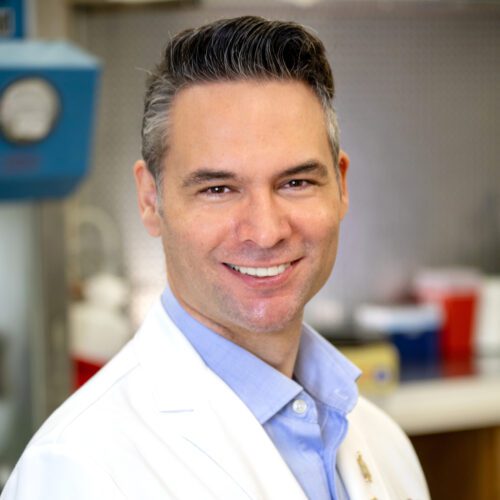
Juan Pablo de Rivero Vaccari, Ph.D., M.S.B.A.
Associate Professor, Department of Neurological Surgery
The Miami Project to Cure Paralysis
1095 NW 14th Terrace (R-48)
Miami, FL 33136
(305) 243-1252
Dr. de Rivero Vaccari is an Associate Professor in the Department of Neurological Surgery & The Miami Project to Cure Paralysis. He is also a Distinguished Faculty member of the Center for Cognitive Neuroscience and Aging, the Neuroscience Graduate Program and the Cellular Physiology and Molecular Biophysics Graduate Program at the University of Miami Miller School of Medicine as well as faculty of the Translational and Clinical Oncology Research Program at Sylvester Comprehensive Cancer Center, and a member of the University of Miami Evelyn F. McKnight Brain Institute.
Dr. de Rivero Vaccari graduated Summa Cum Laude with a B.S. in Biology from Florida International University where he was inducted into the Phi Beta Kappa Honor Society (2004). He then pursued his Ph.D. in Physiology & Biophysics at the University of Miami in the laboratory of Dr. Robert W. Keane (2007) and his post-doctoral fellowship in Neurotrauma at The Miami Project to Cure Paralysis in the laboratory of Dr. W. Dalton Dietrich (2010). He also holds a M.S. in Business Analytics from the Herbert Business School of the University of Miami (2020). He has trained in Biomarker Science at The Harvard Clinical and Translational Science Center, in Computational Immunology at The Santa Fe Institute, and in Space Biology as part of the Spaceflight Technology, Applications and Research Course (STAR-2) organized by the National Aeronautics and Space Administration (NASA).
In addition, he is Lean Six Sigma Green Belt certified. He has studied the innate immune response for over 20 years and was the first to show the involvement of the inflammasome complex in the Central Nervous System after spinal cord and traumatic brain injury. To date, he has published over 120 articles that have been referenced nearly 10,000 times. Dr. de Rivero Vaccari currently serves as the CNS Injury sub-group lead for the NASA Alzheimer’s Disease and Brain Resilience (ADBR) Analysis Working Group (AWG). He has been doing NASA-related research for the last 5 years and has carried out microgravity experiments at the Kennedy Space Center at the Microgravity Simulation Support Facility (MSSF) and was a participant in the Boosting Spaceflight Underrepresented Research Equity (B-SURE) supported by the Translational Research Institute for Space Health (TRISH).
Innate Immunity in CNS Injury and Disease
My research focuses on understanding early inflammatory events corresponding to the innate immune response, the first line of defense against tissue damage and infections.
The immune response is divided into two phases: Innate immunity and adaptive immunity. The innate immune phase corresponds to the early events of the inflammatory response and precedes the adaptive immune phase. It is classically defined as the first line of defense against infections and damage. It is initiated by danger/damage-associated molecular patterns (DAMPs), by pathogen-associated molecular patterns (PAMPs) or homeostasis altering molecular processes (HAMPs) that are recognized by pattern recognition receptors (PRRs).
PRRs include toll-like receptors (TLRs), NOD-like receptors (NLRs), RIG-like receptors (RLRs) and C-type lectin receptors (CLRs). Upon PRR-activation, there are a series of signaling events that result in the production of inflammatory cytokines such as interleukin (IL)-1b, IL-18, tumor necrosis factor (TNF) or type I interferons (IFN), among others. These cytokines contribute to tissue damage by mechanisms such as cell death and exacerbated inflammation.
INFLAMMASOMES: Of particular interest to us is the role of the inflammasome, a multiprotein complex involved in the activation of caspase-1, the formation of ASC specks, the processing of the pro-inflammatory cytokines IL-1b and IL-18, and the cell death mechanism of pyroptosis in central nervous system (CNS) injury and disease with a focus on spinal cord injury, traumatic brain injury, stroke, inflammaging and Alzheimer’s Disease.
BIOMARKERS: We study biomarkers as prognostic and diagnostic options that also have the potential to be used as therapeutic targets to improve outcomes after CNS injury and disease. The development of biomarkers for CNS injury and disease has the potential to improve the care of patients by determining the severity of damage to the CNS as well as by monitoring the recovery of patients after therapeutic interventions.
My laboratory studies the innate immune response mainly in the following conditions:
Spinal Cord Injury (SCI): Considering that many patients with SCI are young adults, and that no-FDA approved therapy is yet available, SCI is devastating. The inflammatory response is part of the secondary injury cascade of SCI events and is partially responsible for the deleterious effects occurring after trauma. Therefore, anti-inflammatory therapies offer the possibility of limiting damage after SCI; hence, resulting in improved histopathological and functional outcomes.
Traumatic Brain Injury (TBI): Traumatic brain injury is the leading cause of disability in young adults. The inflammatory response after TBI contributes to neuronal death and progressive axonal loss over days to weeks after injury; thus, a better understanding of how inflammation contributes to brain damage after injury is of utmost importance to develop better therapies to improve outcomes in this patient population.
Stroke: Stroke is a major problem affecting populations worldwide. It is the second most common cause of death in the world after heart disease. In the United States stroke is the fourth leading cause of death, and the societal costs are approximately 80 billion dollars, which are expected to double by the year 2030. Moreover, the inflammatory response is a key contributor to the deleterious outcomes after stroke. As a result, it is important to identify new and better anti-inflammatory therapies aimed at successfully treating this patient population.
Inflammaging and Alzheimer’s Disease (AD): As we age our brain produces a basal level of inflammation that progresses over time, a phenomenon referred to as inflammaging. This inflammatory response in part contributes to the cognitive decline associated with aging, and it also contributes to the development of neurodegenerative disease like AD. Thus, by therapeutically targeting the inflammatory response we have the potential to delay the onset of neurodegeneration.
Visit Dr. de Rivero Vaccari’s Publication Listing
News Stories
Neuronal Inflammasomes: How the Brain’s Immune Sensors Influence Health, Injury and Disease (01/2026)
Martial arts as a model for his teaching (10/2025)
University of Miami Television (10/2025)
Is ‘inflammaging’ part of getting older? Here’s what experts say (10/2025)
Team Science: State of Florida Supports Miller School Alzheimer’s Research (09/2025)
Interrogating the Inflammasome, Traumatic Brain Injury and Alzheimer’s Risk (09/2024)
Neurocritical Care Society Podcast (03/2022)
Industry and Academia: Inflamacore, LLC (10/2016)
Research Journal Feature (09/2016)
Dr. Dalton Dietrich and Colleagues Receive $1.6 Million NIH Award (06/2016)
Scientists Receive NIH Funding to Move Novel Therapy Targets Forward (04/2014)
PROFESSIONAL AFFILIATIONS/MEMBERSHIPS
American Heart Association (AHA)
Laboratory Members
Current Ph.D. Students
| Erika Cabrera Ranaldi | Neuroscience Graduate Program | edc74@miami.edu |
| Alexandra Remnitz | Neuroscience Graduate Program | aremnitz@med.miami.edu |
Former Ph.D. Students
| Dr. Brianna Cyr | Neuroscience Graduate Program | Post-Doctoral Fellow |
| Dr. Ruby R. Taylor | Biomedical Engineering | MSTP Student |