

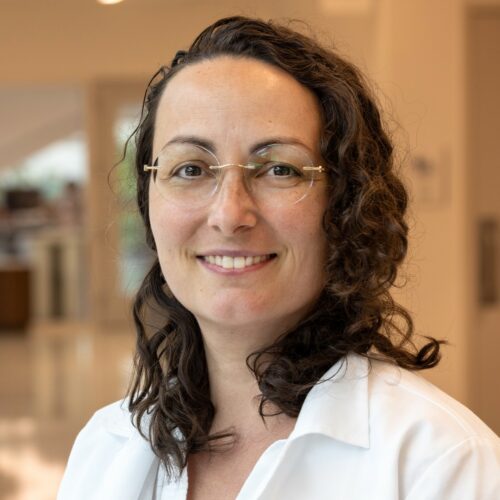
Roberta Vastano Ph.D.
Research Assistant Professor, Department of Neurological Surgery
The Miami Project to Cure Paralysis
1095 NW 14th Terrace (R-48)
Miami, FL 33136
(305) 243-6001
Roberta Vastano is a cognitive neuroscientist and a Research Assistant Professor in the Department of Neurological Surgery at the University of Miami, The Miami Project to Cure Paralysis. Her research examines how spinal cord injury and neuropathic pain affect cognitive functions.
She earned her PhD in Bioengineering and Robotics, specializing in Cognitive Science, from the Italian Institute of Technology in 2017, and was a visiting researcher at Ghent University. She also holds an MSc in Cognitive and Experimental Psychology from D’Annunzio University of Chieti–Pescara.
Her earlier work focused on the sense of agency and how the brain links voluntary actions with their sensory consequences. Building on this foundation, she developed a research program using spinal cord injury as a model to study how disrupted sensorimotor signals alter multisensory integration, body representation, and higher-order cognition. Her work uses EEG, behavioral methods, and quantitative modeling to identify neural and behavioral mechanisms underlying cortical changes after spinal cord injury.
Dr. Vastano has authored more than 25 peer-reviewed publications in journals including Progress in Neurobiology, Scientific Reports, Neuropsychologia, and Cortex. She has received funding from the Craig H. Neilsen Foundation and the Florida Department of Health, and has contributed to projects supported by the United States Department of Defense.
Cognitive Neuroscience
My research aims to understand how sensorimotor deficits and the presence of neuropathic pain following spinal cord injury impact perception and higher-order cognition.
Multisensory Integration
Our lab uses electroencephalography (EEG) and psychophysical approaches to examine how multisensory signals are integrated under conditions of reduced sensory input in spinal cord injury. We characterize neural responses and apply quantitative modeling to assess the efficiency of multisensory integration and the mechanisms by which the brain compensates when typical sensory channels are compromised.
A major focus of our research is to determine how persistent neuropathic pain further modulates these processes. We investigate how chronic pain alters multisensory integration, with the goal of understanding its downstream effects on multisensory gain.
Body Representation
Using EEG, we study how spinal cord injury reshapes body perception and the cortical processing of body-related information. We further investigate how neuropathic pain interacts with these processes, with the aim of understanding its contribution to altered body representation, and whether non-invasive manipulations of body representation (e.g., bodily illusions combined with brain stimulation) can help alleviate neuropathic pain symptoms.
Higher-Order Cognition
Finally, we investigate how persistent neuropathic pain in spinal cord injury interacts with executive functions, including cognitive control and working memory, across varying task demands. Through this work, we aim to identify quantitative markers of cognitive impairment after spinal cord injury. Our long-term goal is to develop mechanism-based interventions that improve quality of life and reduce neuropathic pain symptoms.