

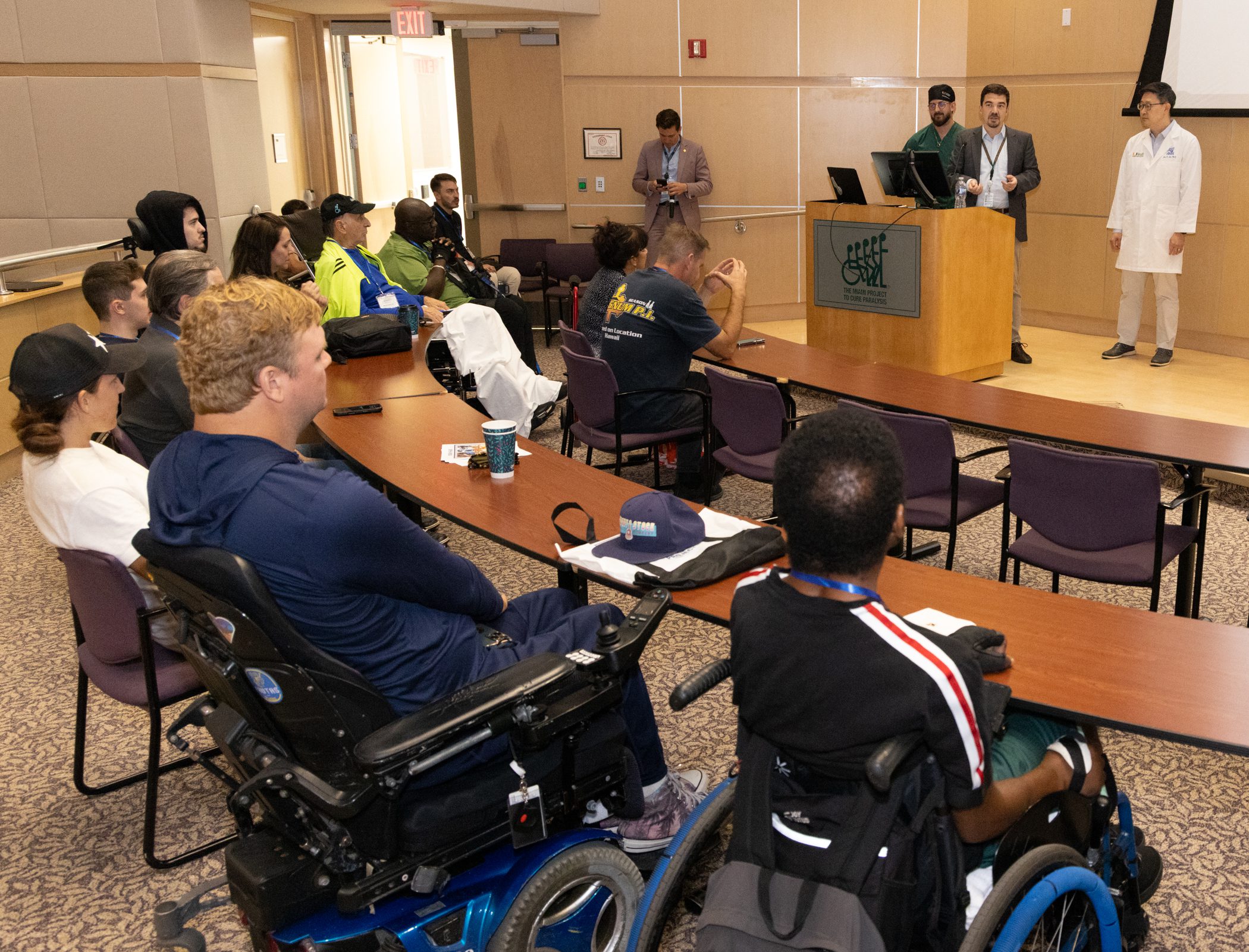
(November 2025) The Miami Project to Cure Paralysis recently hosted its highly anticipated 2025 Open House on October 24th at both the Lois Pope LIFE Center and the Christine E. Lynn Rehabilitation Center. The event was a remarkable showcase of groundbreaking research in the fields of neuroscience and rehabilitation, drawing in a diverse audience of people living with paralysis, their family and friends and supporters eager to learn about the latest advancements.
The Lois Pope LIFE Center served as a hub for stimulating presentations that highlighted the forefront of spinal cord injury research. Dr. Jae K. Lee captivated the audience with an insightful discussion on regenerative and cellular strategies aimed at spinal cord repair. This promising field explores how cellular therapies can potentially restore function and improve the quality of life for individuals with spinal cord injuries.
Dr. Matija Milosevic followed with an engaging presentation on intent-driven neuromodulation. This innovative approach involves using neurological signals to control devices, offering new possibilities for patients with movement impairments. Attendees were particularly fascinated by the potential applications of this technology in enhancing motor function and independence.
One of the highlights of the event was Dr. Seth Tigchelaar’s overview of Neuralink’s brain-computer interface technology. Neuralink, a company founded by Elon Musk, is pioneering the development of implantable brain-computer interfaces. Dr. Tigchelaar’s presentation provided a comprehensive look at how these interfaces can facilitate direct communication between the brain and external devices, opening new frontiers in the treatment of neurological disorders and the enhancement of human capabilities.
Meanwhile, the Christine E. Lynn Rehabilitation Center provided attendees with an immersive experience through a series of laboratory demonstrations. Dr. Gary J. Farkas showcased his research on the gut-brain axis, shedding light on the intricate connections between the digestive system and neurological function. This research has significant implications for understanding how gut health can influence brain health and vice versa.
Dr. James Guest presented on some his work on spinal cord stimulation aimed at restoring hand and arm function. This technique involves electrically stimulating the spinal cord to enhance neural connections and improve motor function. The potential to restore hand and arm movement in individuals with spinal cord injuries is of great interest for many living with these deficits.
Attendees also had the opportunity to witness Dr. Elizabeth Felix’s research on quantifying sensory perception. This research is critical for developing better diagnostic tools and therapeutic interventions for sensory disorders. Dr. Felix’s work provides valuable insights into how sensory information is processed and perceived by the brain.
Dr. Eva Widerstrom-Noga rounded out the demonstrations with her innovative interventions for pain management, focusing on bodily illusion techniques. These methods involve altering the perception of pain through visual and sensory manipulations, offering new avenues for pain relief in patients with chronic pain conditions.
In conclusion, the 2025 TMP Open House was a resounding success, offering a glimpse into the future of neuroscience and rehabilitation research. The event not only highlighted the incredible progress being made in these fields but also inspired the attendees. The Miami Project to Cure Paralysis continues to lead the way in pioneering research, driving forward the quest for breakthroughs that will transform lives.